2026-2027 Courses
Spring 2027
Graduate Courses
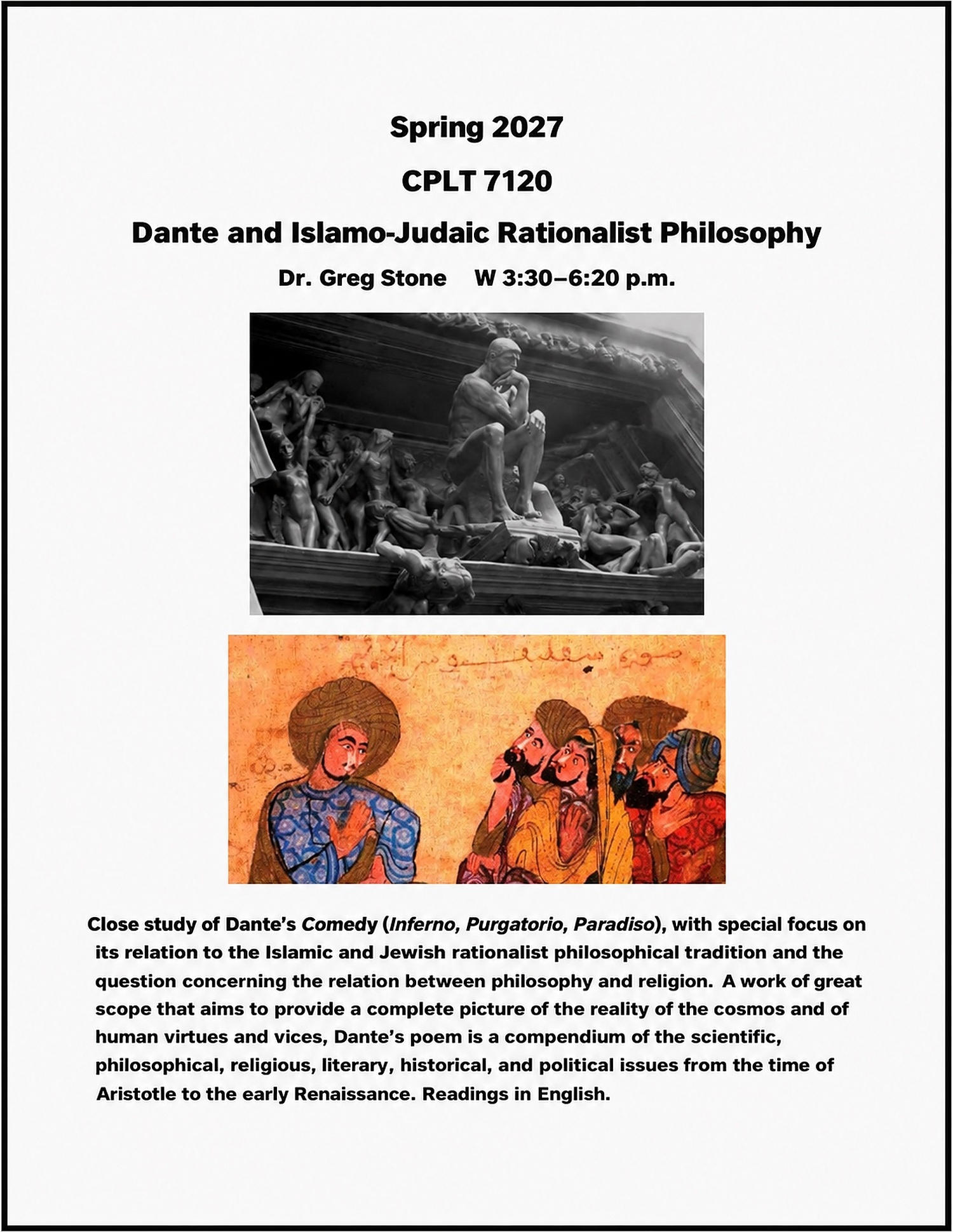 CPLT 7120: Dante and Islamo-Judaic Rationalist Philosophy
Instructor: Greg Stone
Time: W 3:30-6:20 p.m.
Close study of Dante’s Comedy (Inferno, Purgatorio, Paradiso), with special focus on its relation to the Islamic and Jewish rationalist philosophical tradition and the question concerning the relation between philosophy and religion. A work of great scope that aims to provide a complete picture of the reality of the cosmos and of human virtues and vices, Dante’s poem is a compendium of the scientific, philosophical, religious, literary, historical, and political issues from the time of Aristotle to the early Renaissance. Readings in English.
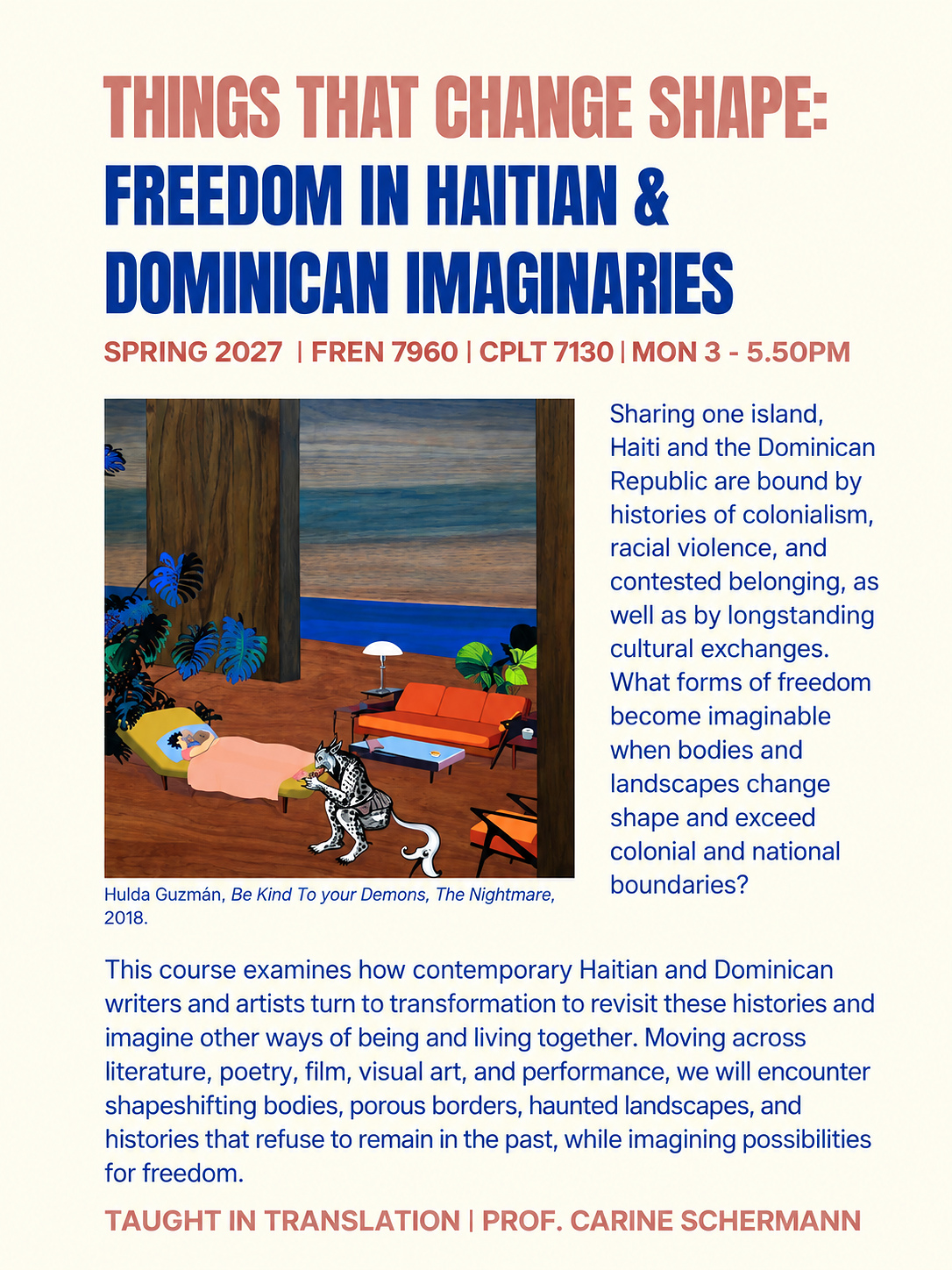
CPLT 7130/FREN 7960: Things That Change Shape: Freedom in Haitian and Dominican Imaginaries
Instructor: Carine Schermann
Time: M 3:00-5:50 p.m.
Sharing one island, Haiti and the Dominican Republic are bound by histories of colonialism, racial violence, and contested belonging, as well as by longstanding cultural exchanges. What forms of freedom become imaginable when bodies and landscapes change shape and exceed colonial and national boundaries? This course examines how contemporary Haitian and Dominican writers and artists turn to transformation to revisit these histories and imagine other ways of being and living together. Moving across literature, poetry, film, visual art, and performance, we will encounter shapeshifting bodies, porous borders, haunted landscapes, and histories that refuse to remain in the past, while imagining possibilities for freedom.
 CPLT 7160/SPAN 7991: Politics in the Modern Hispanic World and Beyond
Instructor: Dr. Dorota Heneghan
Time: Th 4:30-7:20 p.m.
This course will examine the political, literary, and aesthetic currents that shape and knit together the Modern Hispanic World and the Atlantic world in the nineteenth-century and during the postcolonial period. We will discuss how historical processes (and fantasies) of empire-building, colonialism and its legacy, and migration were inextricably tied to politics and cultural relations beyond the colonial past. How did authors address the intersections of colonialism, race, and gender in their narratives, letters, memoirs, and travelogues? We will pay special attention to differences in which men and women experience imperialism, the emergence of global consciousness, and the rich and complex relations that prompt us to shift our focus from local, regional, and national literary and cultural traditions to sociocultural and artistic interactions in the Modern Hispanic World, across the Atlantic and beyond.
Undergraduate Courses
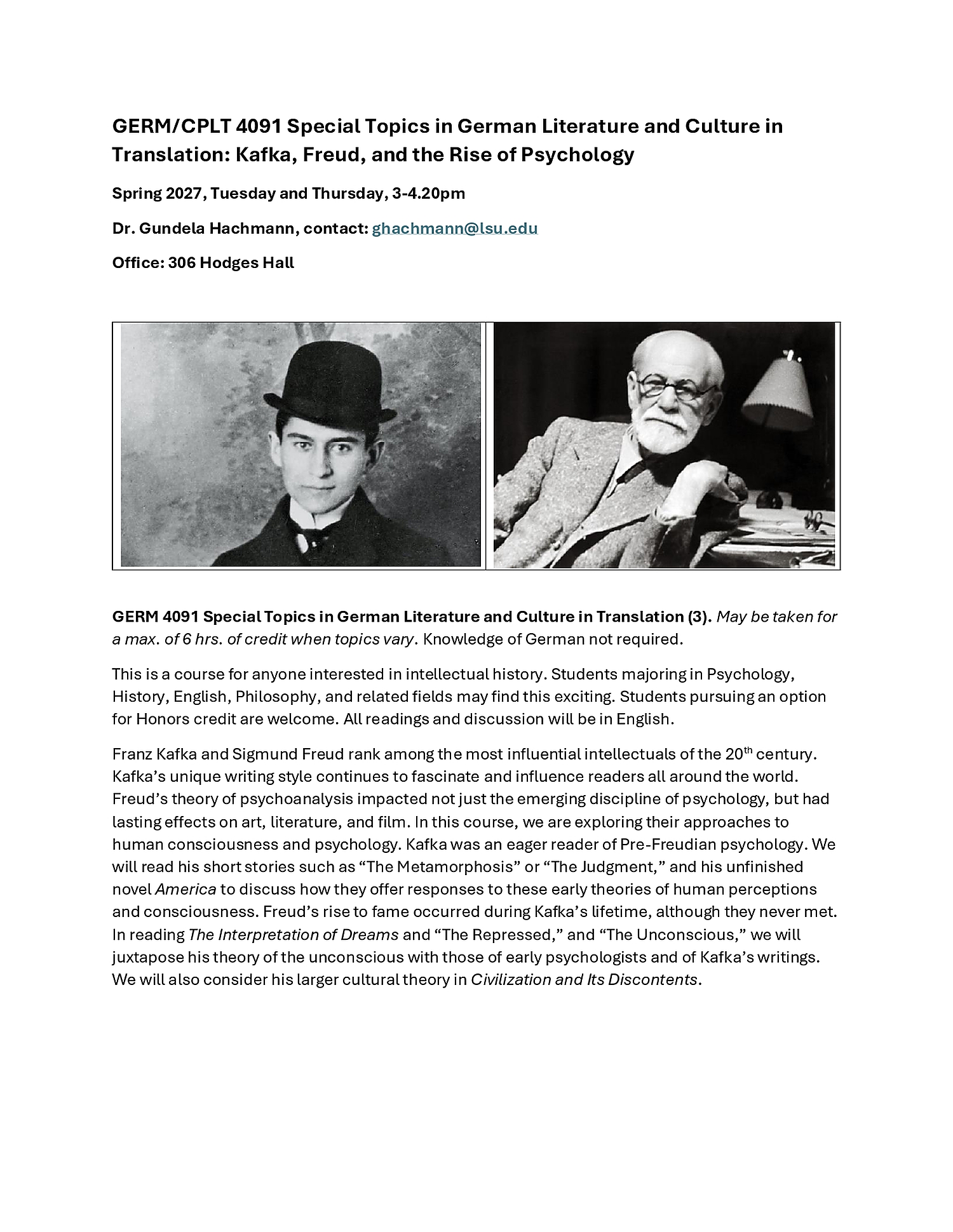
CPLT 4091/GERM 4091: Special Topics in German Literature and Culture in Translation: Kafka, Freud, and the Rise of Psychology
Instructor: Dr. Gundela Hachmann
Time: T, Th 3:00-4:20 p.m.
Franz Kafka and Sigmund Freud rank among the most influential intellectuals of the 20th century. Kafka’s unique writing style continues to fascinate and influence readers all around the world. Freud’s theory of psychoanalysis impacted not just the emerging discipline of psychology, but had lasting effects on art, literature, and film. In this course, we are exploring their approaches to human consciousness and psychology. Kafka was an eager reader of Pre-Freudian psychology. We will read his short stories such as “The Metamorphosis” or “The Judgment,” and his unfinished novel Americato discuss how they offer responses to these early theories of human perceptions and consciousness. Freud’s rise to fame occurred during Kafka’s lifetime, although they never met. In reading The Interpretation of Dreams and “The Repressed,” and “The Unconscious,” we will juxtapose his theory of the unconscious with those of early psychologists and of Kafka’s writings. We will also consider his larger cultural theory in Civilization and Its Discontents.
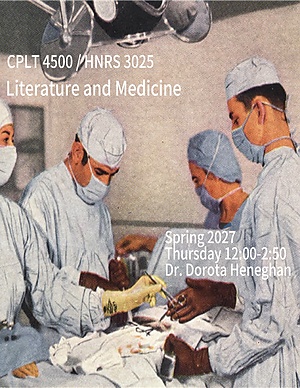
CPLT 4500/HNRS 3025: Literature and Medicine
Instructor: Dr. Dorota Heneghan
Time: Th 12:00-2:50 p.m.
In this course, we will explore how medical practice has changed over time, our ideas of health, illness, disease, pain, and suffering, the roles of stories in clinical care and patient experiences, how money and power influence medicine, aging and dying, and what health professionals should know about religion and spirituality. We will give special attention to how medicine, health, and illness are portrayed in fiction, poetry, memoirs, and movies from around the globe, and learn how to do close readings of those texts. All readings are in English.
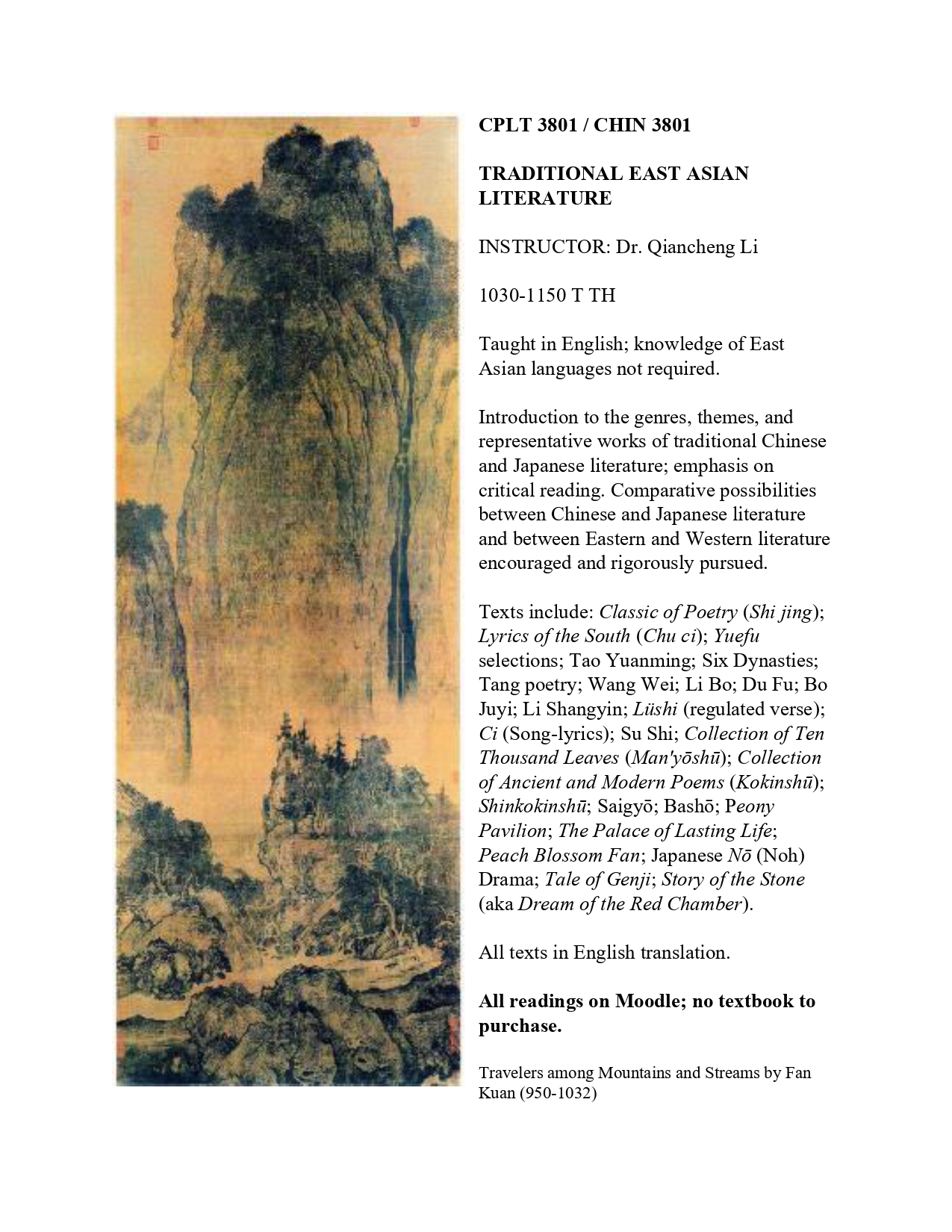
CPLT 3801/CHIN 3801: Traditional East Asian Literature
Instructor: Prof. Qiancheng Li
Time: T, Th 10:30-11:50 a.m.
Taught in English; knowledge of East Asian languages not required. Introduction to the genres, themes, and representative works of traditional Chinese and Japanese literature; emphasis on critical reading. Comparative possibilities between Chinese and Japanese literature and between Eastern and Western literature encouraged and rigorously pursued. Texts include: Classic of Poetry (Shi jing); Lyrics of the South (Chu ci); Yuefu selections; Tao Yuanming; Six Dynasties; Tang poetry; Wang Wei; Li Bo; Du Fu; Bo Juyi; Li Shangyin; Lüshi (regulated verse); Ci (Song-lyrics); Su Shi; Collection of Ten Thousand Leaves (Man'yoshu); Collection of Ancient and Modern Poems (Kokinshu); Shinkokinshü; Saigys; Basho; Peony Pavilion; The Palace of Lasting Life; Peach Blossom Fan; Japanese No (Noh) Drama; Tale of Genji; Story of the Stone (aka Dream of the Red Chamber). All texts in English translation.
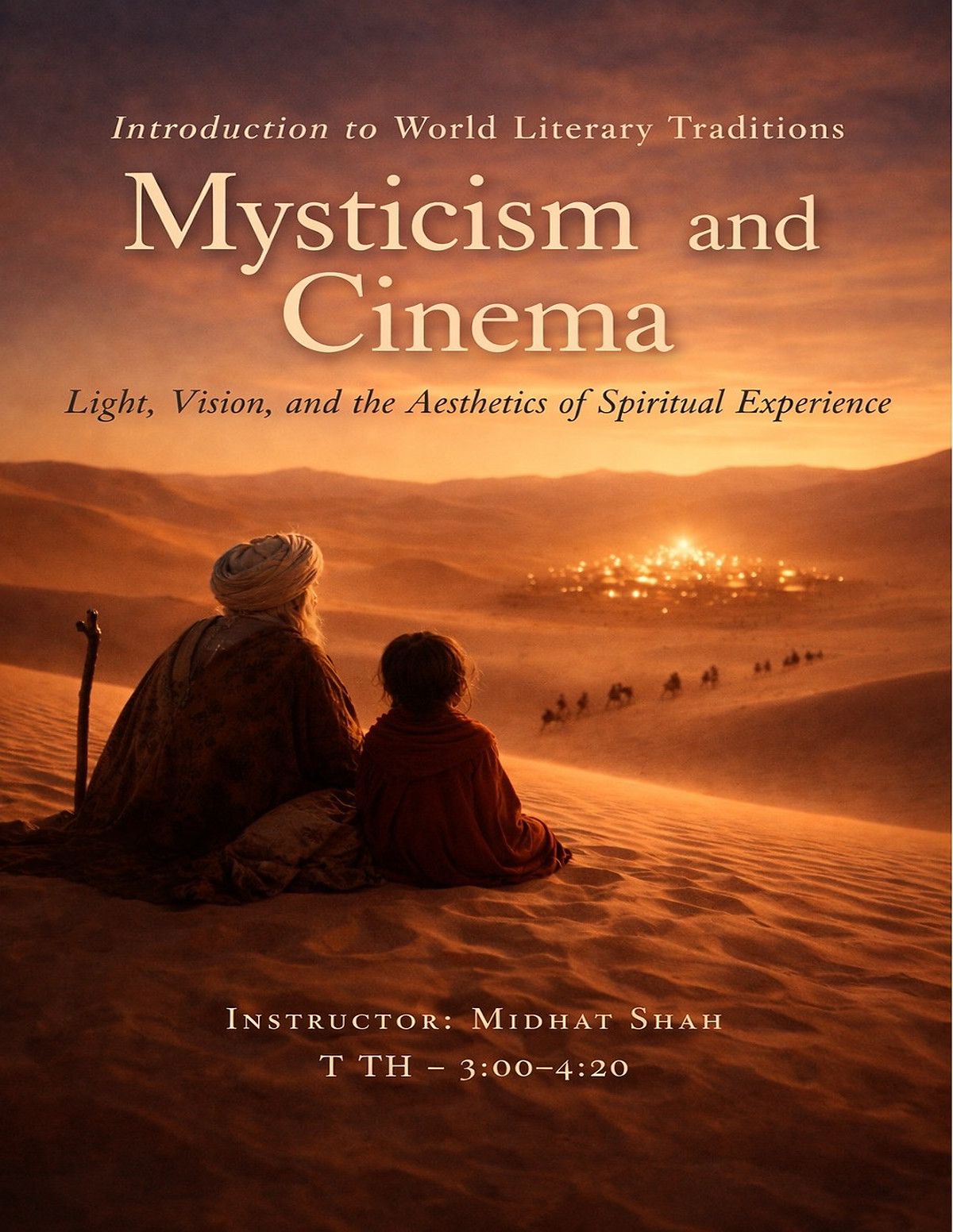 CPLT 2201/ENGL 2201: Introduction to World Literary Traditions: Mysticism and Cinema:
Light, Vision, and the Aesthetics of Spiritual Experience
CPLT 2201/ENGL 2201: Introduction to World Literary Traditions: Mysticism and Cinema:
Light, Vision, and the Aesthetics of Spiritual Experience
Instructor: Midhat Shah
Time: T, Th 3:00-4:20 p.m.
Across cultures and centuries, mystics have written of divine love, annihilation of the self, exile, silence, and illumination. Figures such as Rumi, Meister Eckhart, Mira Bai, and Lalla have sought language for experiences that exceed ordinary speech. Their writings gesture toward what is felt but rarely seen — the trembling threshold between the human and the infinite. This course turns to cinema as a modern medium of mystical expression. If poetry gives us metaphor and song, film offers light, duration, movement, and embodied presence. How does the camera approach what mystics call the ineffable? How does landscape, gesture, sound, and silence render visible the drama of spiritual longing? Drawing on films from Africa, the Middle East, South and East Asia, and Europe, this course studies cinematic works alongside selected mystical and literary texts in English translation. Through sustained analysis, students will explore how filmmakers translate transcendence into image — how divine longing becomes rhythm, how illumination becomes light, and how the dissolution of the self is staged through visual form. Moving between contemplation and critique, text and screen, this course invites students to reconsider cinema not merely as narrative entertainment, but as a medium capable of spiritual inquiry — a modern site where ancient mystical questions continue to unfold.
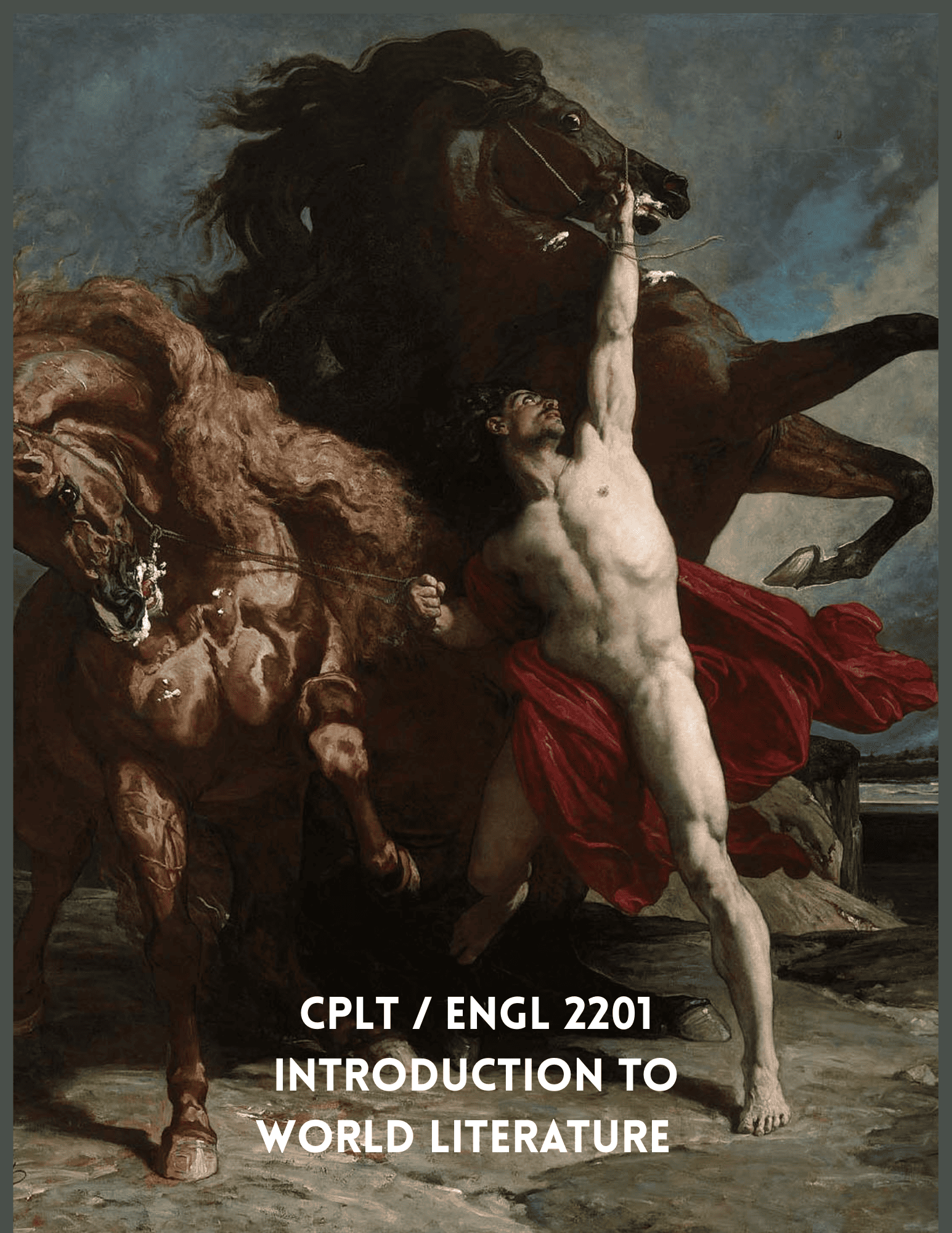 CPLT 2201/ENGL 2201: Introduction to World Literature
Instructor: Gabrielle Delahoussaye
Time: T, TH 1:30-2:50 p.m.
In this course, students will be introduced to classic works of literature, including Homer’s Iliad, Sophocles’ Oedipus Rex, and Shakespeare’s Hamlet. Our focus will be the theme of heroism, or the ideals of courage and excellence that shape life and literature. Students will be asked to compare various cultural, historical, and ethical frameworks. Special attention will be paid to the ways in which heroic characters uphold but also defy the behavioral codes impressed on them. Emphasis throughout will be on developing the ability to think independently, cogently, and decisively about fundamental issues that arise from reflection on the nature of human existence
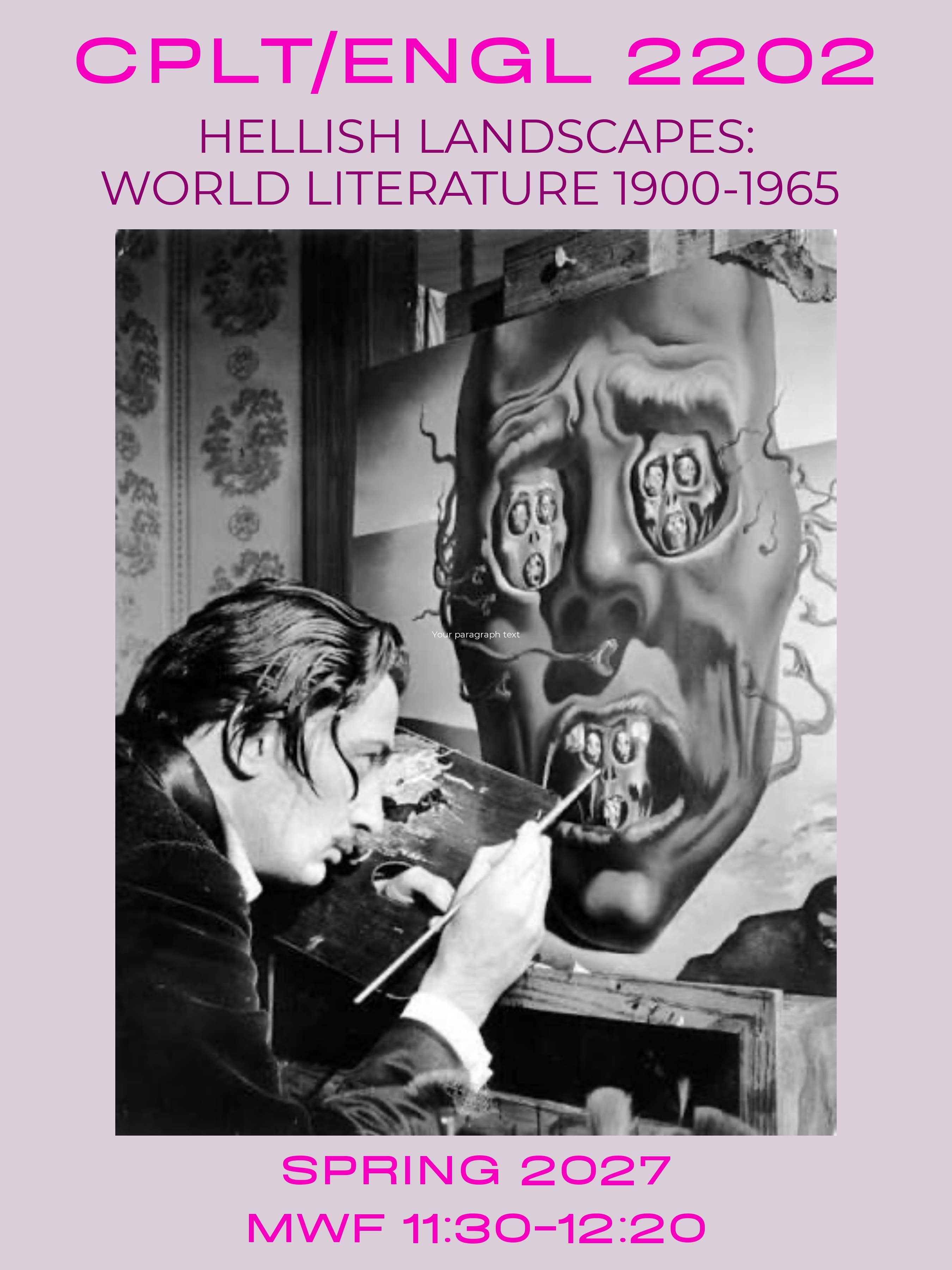
CPLT 2202/ENGL 2202: Introduction to Modern World Literature: Dystopian Fiction and Post-War Realities 1910-1970
Instructor: Gabrielle Bologna
Time: MWF 11:30-12:20 p.m.
This course focuses on twentieth-century world literature in its most harrowing spaces, exploring how global crisis and systemic conflict force traditional underworld lore out of myth and into modern reality. Between 1900 and 1965, an unprecedented acceleration of historical trauma took the globe by storm—spanning two world wars, the rise of totalitarian regimes and extreme ideological division, industrial advance, economic collapse, and the dawn of the nuclear age. In response, authors abandoned idealized landscapes for portrayals of a real-world abyss. In this course, we will descend into these infernal environments, trace their old-world origins, and discuss how authors use the underworld to emphasize the widespread psychological and political fractures of the modern age. Our readings will map the transformation of the modern “wasteland” across geographic and stylistic borders. On our journey through the mechanized nightmares of Franz Kafka and Yevgeny Zamyatin, the spiritual deserts of Modernist poetry, and the rocky moral terrains of Graham Greene and Thomas Mann, we will confront the deep philosophical and technological anxieties that dominate mid-twentieth-century literature. Through comparative analysis, we turn to one central question: how do authors use the infernal landscape as a mirror for political trauma, existential despair, and systemic cruelty? By closely examining how these distinct texts overlap, we will uncover how twentieth-century literature redefines survival in the machine of modern history.
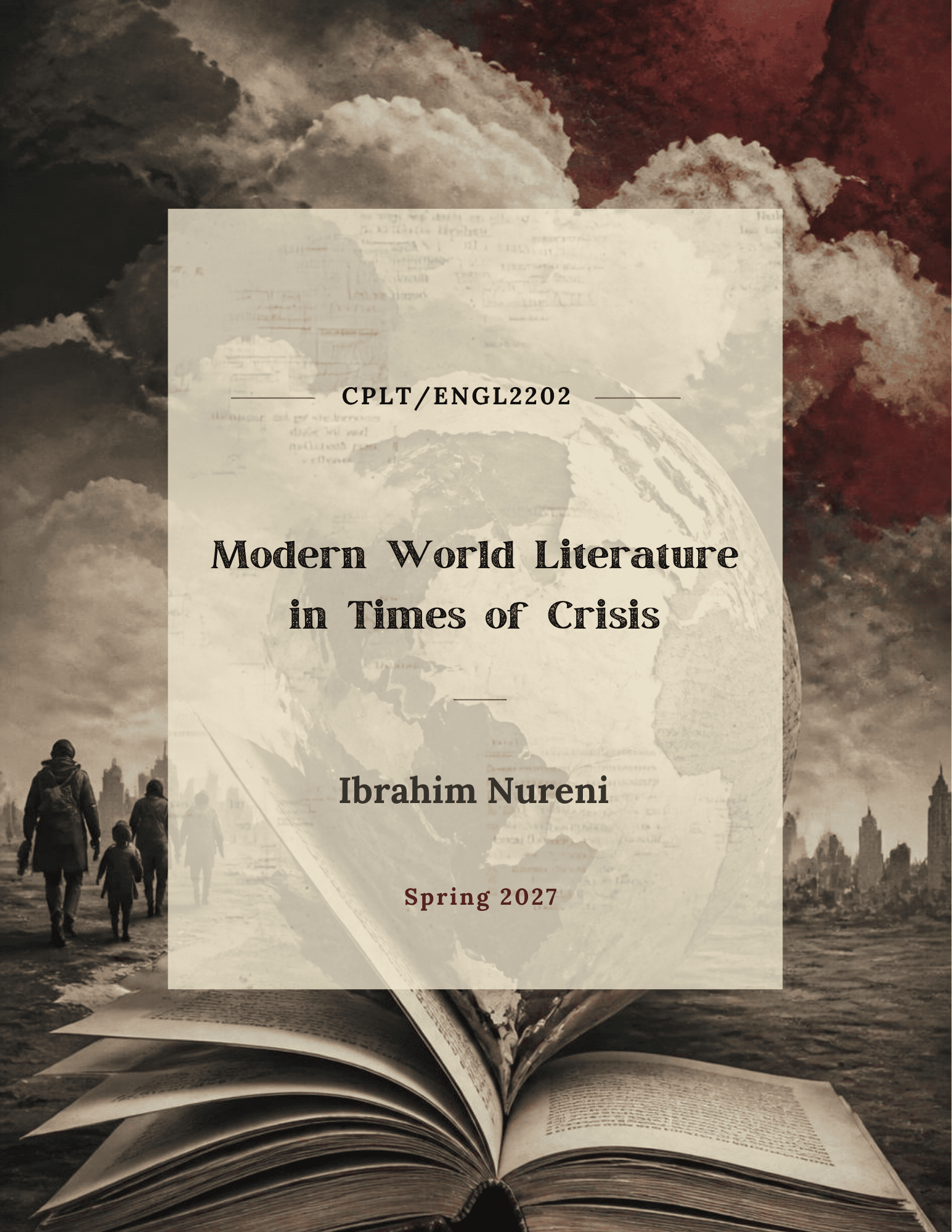 CPLT 2202/ENGL 2202: Modern World Literature in Times of Crisis
Instructor: Ibrahim Nureni
Time: MWF 10:30-11:20 a.m.
In this course, we will explore literature from the Renaissance to today, focusing on how writers respond to political, social, cultural, and environmental crises. We will treat literature as a living space where history’s turning points are challenged. Together, we will ask: Does literature record crises and offer ways of surviving them, or can it become a force for changing the world? We will consider how changes in form and thematic focus respond to and challenge social breakdown. We will read works from Europe, Africa, Asia, and the Caribbean to examine how crisis has shaped literature across different times and places, from early modern political turmoil to anti-colonial struggles and their aftermath. Our reading list includes works by William Shakespeare, Lu Xun, Samuel Beckett, Ngugi wa Thiong’o, Jamaica Kincaid, Okot p’Bitek, and others.
CPLT 2203/SCRN 2203: Introduction to Global Cinemas: Film History, Theory, and Analysis
Instructor: Yuxin Tian
Time: T, TH 09:00-10:20 a.m
This course introduces students to global cinema through a combination of film history, film theory, and close analysis. Beginning with early experiments in moving images, editing, and cinematic narration, the course examines how cinema developed as a distinctive aesthetic medium. It then introduces several influential approaches to film interpretation, including semiotics, psychoanalysis, and theories of ideology, before turning to sensation, aesthetic experience, and the ways cinema produces feeling and perceptual engagement. Through films from Europe, Asia, Latin America, and the United States, students will consider how cinema constructs meaning, organizes perception, represents social and cultural experience, and challenges established ways of understanding the relationship among images, spectators, objects, and the world.
Featured Films:
The Horse in Motion
A Trip to the Moon
The Rules of the Game
Rear Window
The Gleaners and I
In the Mood for Love
Fall 2026
Graduate Courses
CPLT 7010: Research Methods and Bibliography
Instructor: Dr. David Nee
Time: M 3:00-6:00 p.m.
This seminar will introduce students to the foundational texts of Western literary theory and criticism from antiquity to the Romantic period. We will read selections from the Norton Anthology of Theory and Criticism, 3rd ed., including authors such as Plato, Aristotle, Horace, Longinus, Dante, Sir Philip Sidney, Vico, Samuel Johnson, Kant, Schiller, and Hegel. Students will complete an annotated bibliography, deliver an in-class oral presentation, and submit a final research paper. Emphasis will be placed on the careful analysis of arguments presented in each reading; on understanding what is at stake in current scholarly debates about our texts; and on the relevance of the history of literary theory to students’ research interests.
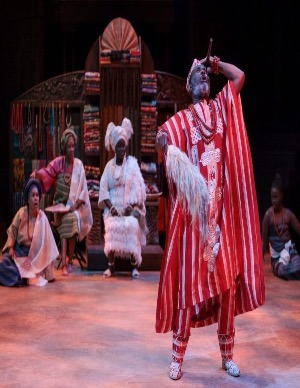 CPLT 7130/THTR 7926: Drama of Africa
Instructor: Dr. Femi Euba
Time: T, Th 10:30-11:50 a.m.
A comparative study of the forms of dramatic and theatrical expressions of the black cultures in Africa, identifying, where possible, not only African influences on some of the dramatic works in the diaspora, but also the Western classical influences on African plays. Works include those by Wole Soyinka, Ngugi wa Thiong’o, Efua Sutherland, Ama Ata Aidoo, Athol Fugard et al, Tewfik al-Hakim, etc.
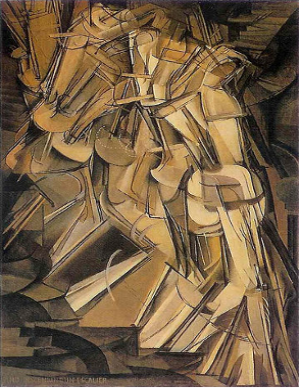 CPLT 7140: Philosophy of the Avant-Garde
Instructor: Dr. Adelaide Russo
Time: W 3:30-6:20 p.m.
In this course, students will study the theoretical thought inspired by twentieth century European avant-garde movements in literature, art, cinema, and architecture and their dissemination world-wide including the Americas, Africa, and Asia. The movements addressed include: Cubism; Dada; Futurism; Constructivism; Surrealism; Bauhaus; and Situationism. We will study the theoretical foundations and philosophical formulations as they are expressed in the manifestoes produced by the artists themselves and in the work of such theorists as Walter Benjamin, Renato Poggioli, Peter Burger, Clement Greenberg, and Guy Debord. Avant-Garde movements are characterized by their refusal of tradition, questioning of political and social structures, integration of art in life, innovation, and experimentation which results in the transformation of perception, aesthetic, and ethical thought. Our research questions will include how these movements change artistic practice and society; how they borrow from indigenous cultures, and non-European practices; and how are they considered in the twenty-first century? Students will be required to write a critical essay on the theory and practice of the Avant-Garde which they will develop in consultation with their instructor. Students in MEA programs may present a project which incorporates the principles and historical content of the course. Course taught in English. Reading knowledge of French, German, Spanish, or Russian is desirable.
 CPLT 7170: Methodology for Teaching World Literature
Instructor: Dr. Dorota Heneghan
Time: TH 3:00-6:00 p.m.
The goal of this course is twofold: 1) introduce students to current and past debates about questions of method, purpose, and challenges to teach world literature 2) explore a set of pedagogical techniques to create syllabi related to the selected theme in a variety of texts and films spanning the chronological periods to which the current undergraduate courses: CPLT 2201/ ENGL 2201, CPLT 2202 / ENGL 2202 and CPLT 2203 / SCRN 2203 correspond. In addition to surveying comparative literature’s history and approaches to teaching world literature and global cinema, students will examine methods for using secondary sources for original interpretation and presentation of selected texts and films, selection and development of teaching materials, observations of classes and reflective self-assessment.
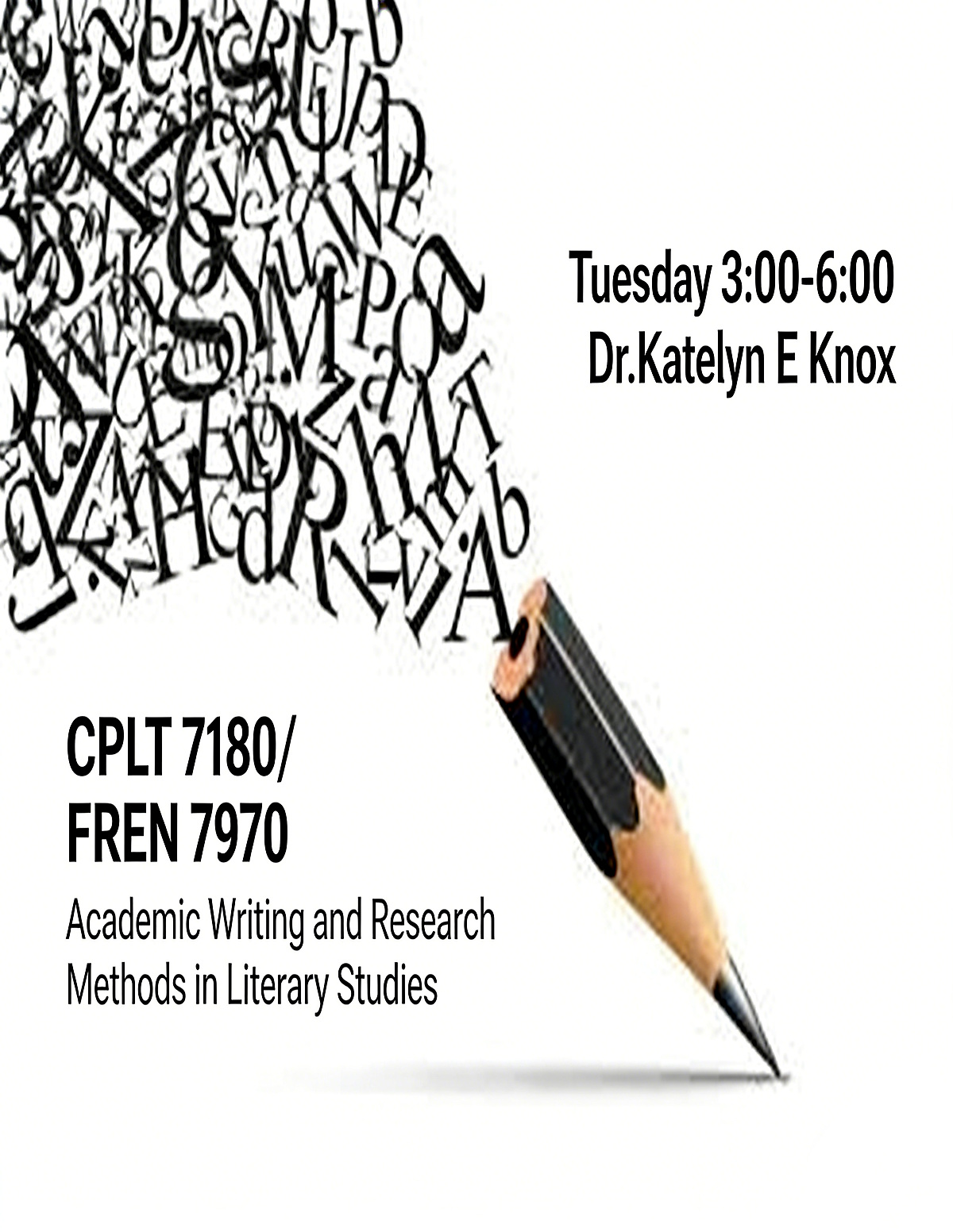 CPLT 7180/FREN 7970: Academic Writing and Research Methods in Literary Studies
Instructor: Prof. Katelyn Knox
Time: T 3:00-6:00 p.m.
Taught in English, this graduate seminar introduces students in comparative literature and French and francophone studies, to research methods as a comprehensive practice—from formulating scholarly questions and selecting theoretical frameworks to writing and revising compelling arguments and developing them through analysis. We will explore how to design research within disciplinary conventions: engaging primary texts through close reading and cultural analysis, situating your work within critical conversations, and articulating methodological choices that shape your interpretations. Students will learn to identify interests and potential topics in a limited corpus, develop these interests into focused research questions, and craft nuanced arguments appropriate for your various fields. The course centers on producing a zero draft and then systematically revising it through targeted techniques—reverse outlining to strengthen argument structure, developmental editing to refine analysis, and line-level polishing to achieve clarity and precision. You will complete one substantial research project (which can include a prospectus draft, seminar paper, or chapter, as relevant) that moves through the entire process—from initial topic selection through research and zero draft to targeted revision and submission-ready manuscript.
Undergraduate Courses
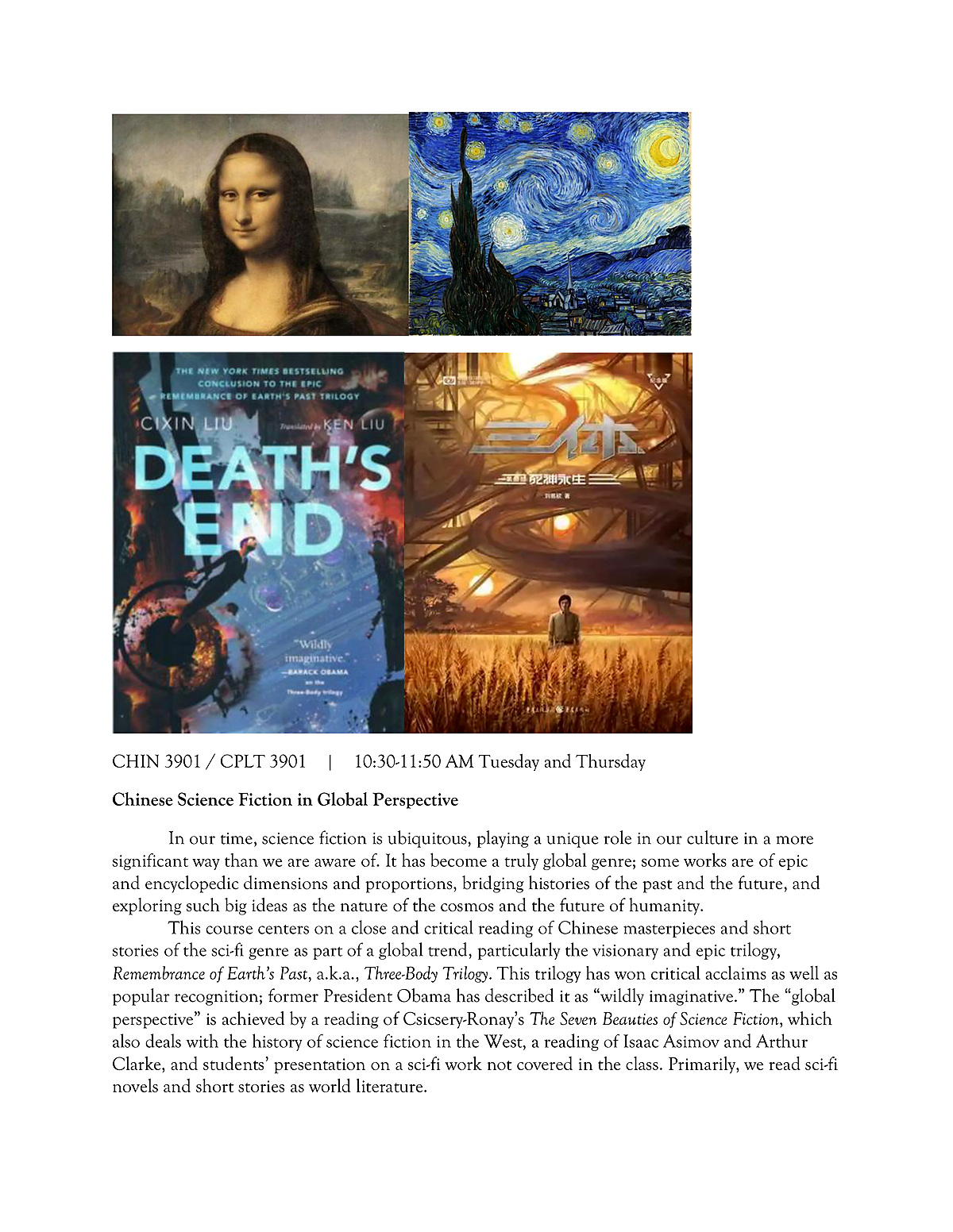
CPLT 3901/CHIN 3901: Chinese Science Fiction in Global Perspective
Instructor: Prof. Qiancheng Li
Time: T, TH 10:30-11:50 a.m.
In our time, science fiction is ubiquitous, playing a unique role in our culture in a more significant way than we are aware of. It has become a truly global genre; some works are of epic and encyclopedic dimensions and proportions, bridging histories of the past and the future, and exploring such big ideas as the nature of the cosmos and the future of humanity. This course centers on a close and critical reading of Chinese masterpieces and short stories of the sci-fi genre as part of a global trend, particularly the visionary and epic trilogy, Remembrance of Earth's Past, a.k.a., Three-Body Trilogy. This trilogy has won critical acclaims as well as popular recognition; former President Obama has described it as "wildly imaginative." The "global perspective" is achieved by a reading of Csicsery-Ronay's The Seven Beauties of Science Fiction, which also deals with the history of science fiction in the West, a reading of Isaac Asimov and Arthur Clarke, and students' presentation on a sci-fi work not covered in the class. Primarily, we read sci-fi novels and short stories as world literature.
CPLT 2201/ENGL 2201: Introduction to World Literary Traditions: Mysticism and Cinema: Light, Vision, and the Aesthetics of Spiritual Experience
Instructor: Midhat Shah
Time: T, Th 3:00-4:20 p.m.
Across cultures and centuries, mystics have written of divine love, annihilation of the self, exile, silence, and illumination. Figures such as Rumi, Meister Eckhart, Mira Bai, and Lalla have sought language for experiences that exceed ordinary speech. Their writings gesture toward what is felt but rarely seen — the trembling threshold between the human and the infinite. This course turns to cinema as a modern medium of mystical expression. If poetry gives us metaphor and song, film offers light, duration, movement, and embodied presence. How does the camera approach what mystics call the ineffable? How does landscape, gesture, sound, and silence render visible the drama of spiritual longing? Drawing on films from Africa, the Middle East, South and East Asia, and Europe, this course studies cinematic works alongside selected mystical and literary texts in English translation. Through sustained analysis, students will explore how filmmakers translate transcendence into image — how divine longing becomes rhythm, how illumination becomes light, and how the dissolution of the self is staged through visual form. Moving between contemplation and critique, text and screen, this course invites students to reconsider cinema not merely as narrative entertainment, but as a medium capable of spiritual inquiry — a modern site where ancient mystical questions continue to unfold.
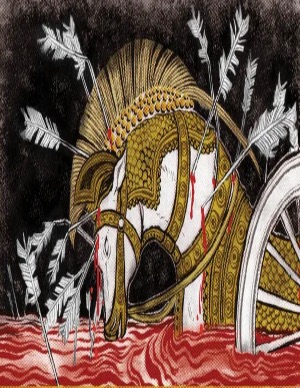 CPLT 2201/ENGL 2201: The Hero in World Literature
Instructor: Gabrielle Delahoussaye
Time: T, TH 1:30-2:50 p.m.
In this course, students will be introduced to classic works of literature, including Homer’s Iliad, Sophocles’ Oedipus Rex, and Shakespeare’s Hamlet. Our focus will be the theme of heroism, or the ideals of courage and excellence that shape life and literature. Students will be asked to compare various cultural, historical, and ethical frameworks. Special attention will be paid to the ways in which heroic characters uphold but also defy the behavioral codes impressed on them. Emphasis throughout will be on developing the ability to think independently, cogently, and decisively about fundamental issues that arise from reflection on the nature of human existence.
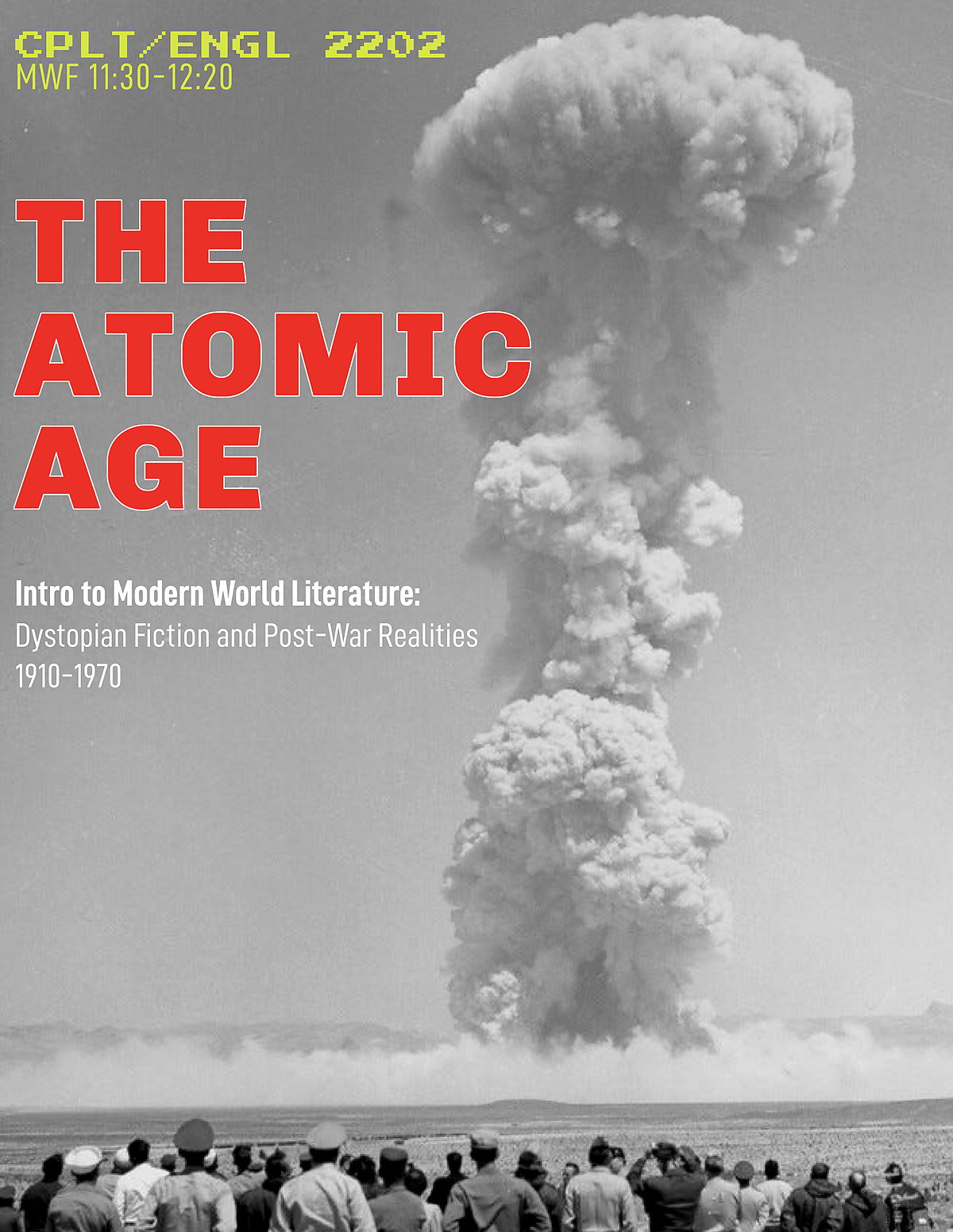
CPLT 2202/ENGL 2202: Introduction to Modern World Literature: Dystopian Fiction and Post-War Realities 1910-1970
Instructor: Gabrielle Bologna
Time: MWF 11:30-12:20 p.m.
In this course, we will read our way through the first half of the twentieth century with literature bridging the gap between the imaginary and the real. Moving across genres, from the dystopian to the historical novel, we will encounter visions of post-war environments, technological advances, oppressive regimes, and normative change. As we engage with material authored in the wake of Imperial collapse and increasing international conflict, our focus turns toward a broader question surrounding themes of crisis and revolution, reflecting on how this literary era shapes and challenges our understandings of past, present, and future.
CPLT 2202/ENGL 2202: Introduction to Modern World Literature: Going Against the Norm
Instructor: Ibrahim Nureni
Time: MWF 10:30-11:30 a.m.
This course examines literature from the Renaissance to the present as writing produced during periods of crisis and transformation. It emphasizes works that challenge established social, political, and cultural norms, analyzing how writers resist authority and envision alternative modes of thought and existence. In the course, the concept of “Going against the Norm” is defined broadly to include political upheavals, social change, anti-colonial struggles, feminist movements, and cultural reconfigurations. The course surveys texts from Europe, Africa, the Caribbean, and Asia, investigating how writers respond to power, oppression, and social transformation. Readings include works by William Shakespeare, Ngugi wa Thiong'o, Jamaica Kincaid, and Samuel Beckett, among others. We will analyze how literature both reflects and resists the norms of its era, whether political, social, or aesthetic.
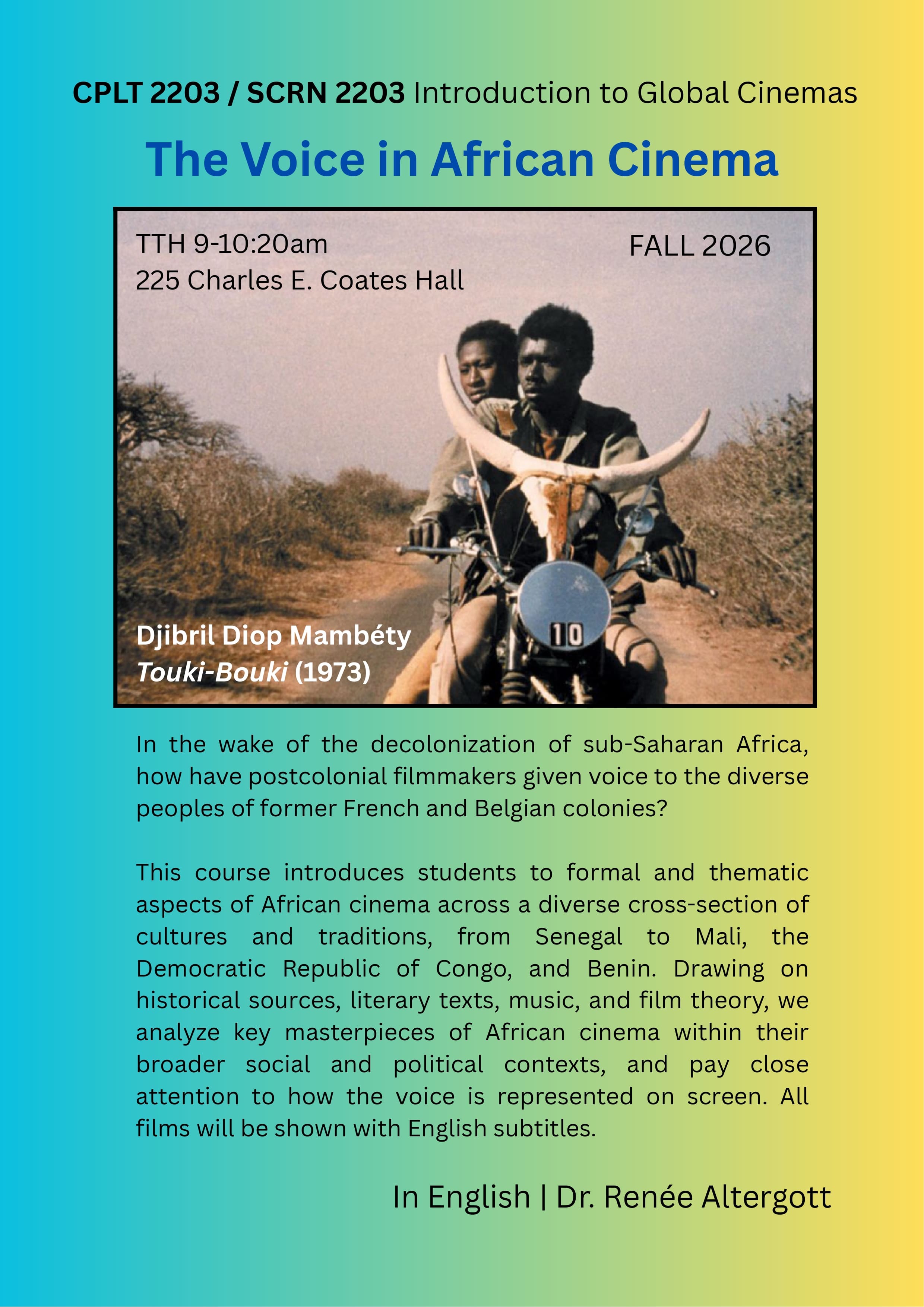
CPLT 2203/SCRN 2203: Introduction to Global Cinemas
Instructor: Dr. Renée Altergott
Time:T, TH 09:00-10:20 a.m.
In the wake of the decolonization of sub-Saharan Africa, how have postcolonial filmmakers given voice to the diverse peoples of former French and Belgian colonies? This course introduces students to formal and thematic aspects of African cinema across a diverse cross-section of cultures and traditions, from Senegal to Mali, the Democratic Republic of Congo, and Benin. Drawing on historical sources, literary texts, music, and film theory, we analyze key masterpieces of African cinema within their broader social and political contexts, and pay close attention to how the voice is represented on screen. All films will be shown with English subtitles.